A Critical Need
Inflammatory bowel disease (IBD) is a family of lifelong diseases of the intestine, including the most common: ulcerative colitis and Crohn’s disease. IBD occurs when the immune system attacks healthy gut cells, causing damage and symptoms such as diarrhea, stomach pain, fatigue, nausea, and weight loss. Treatment can include drugs to reduce inflammation and surgery to remove affected intestine. IBD increases the risk of colon and rectal cancers and can lead to
poor bone density, skin and joint issues, and fatty liver disease. IBD affects roughly 3.1 million Americans at an annual cost of $50 billion. Both incidence and costs are rising, making IBD a significant societal health concern.
Global Impact
The Inflammatory Bowel Disease Center at
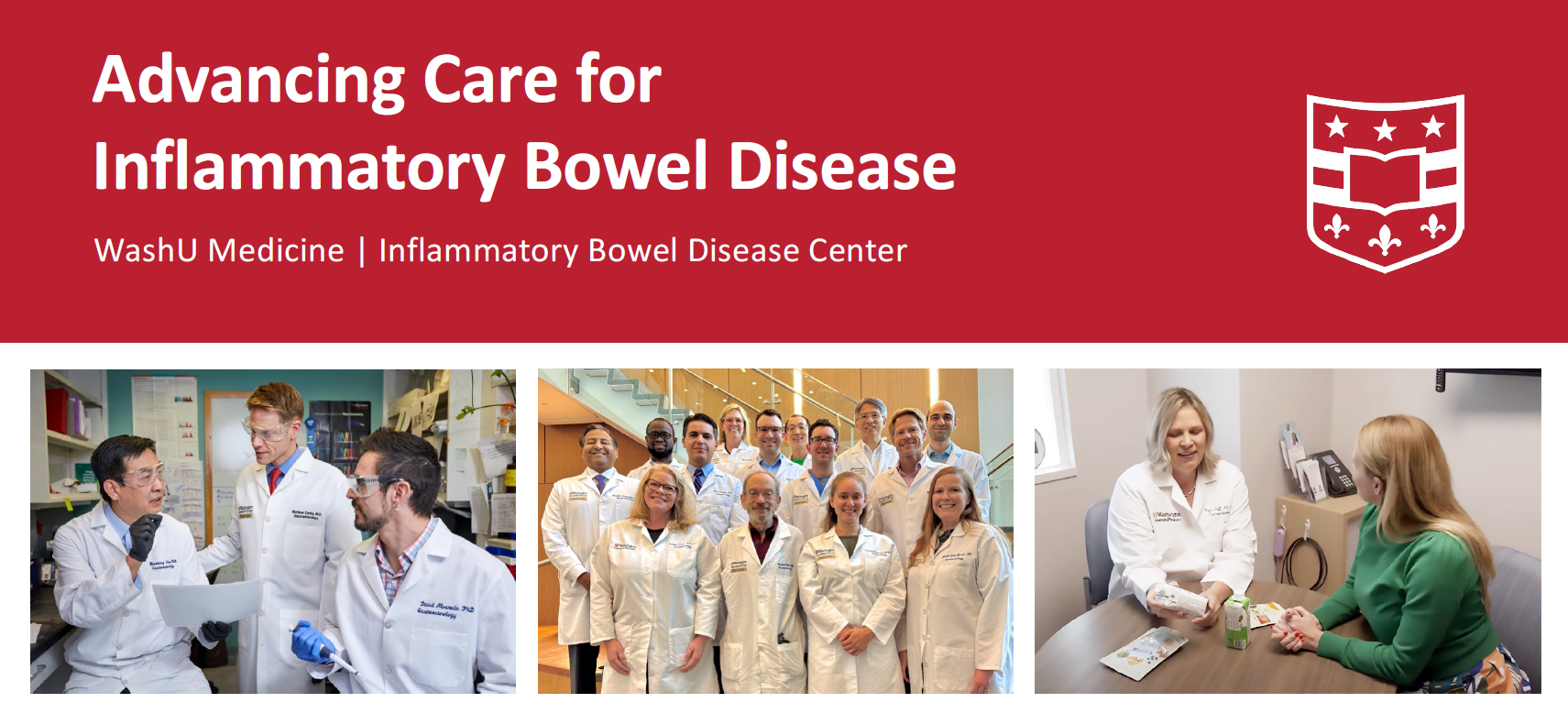
WashU Medicine is a national leader in IBD
research, education, and patient care, dedicated to forging a healthier future for those living with these difficult conditions. In everything we do, philanthropic support plays a critical role in fueling our progress, helping to ensure that those affected by IBD have the best possible outcomes.
Researchers at the Inflammatory Bowel Disease Center have made major contributions to explaining how IBD starts and progresses, to developing and refining treatment methods, and to creating ways to improve overall treatment effectiveness. Their work is advancing care for
patients worldwide.
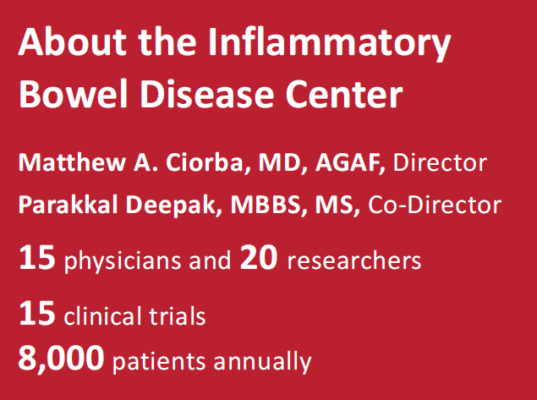
Our physicians provide expert patient care in one of the largest IBD clinics in the country. We offer a level of treatment available in only a few centers nationwide, with the expertise to handle even the most complex cases. Through our clinical trials, patients have access to investigational approaches that may not be available elsewhere.
Our nationally recognized Advanced IBD
Fellowship Program provides outstanding
research and clinical training. Graduates go on to serve in leading roles in medicine around the U.S.

Improving lives through research and innovation
Through innovative research, we continually seek better ways to understand, diagnose, treat, and prevent IBD to help patients in our own clinic and worldwide.
Current work includes:
- Investigating the root causes of IBD so that prevention will be possible
- Developing new treatments to improve outcomes and safety
- Advancing novel imaging techniques and biomarkers to predict disease progression and monitor therapy
response — work that ultimately will reduce the need for frequent colonoscopies - Studying IBD complications: Fistulizing Crohn’s, Pouchitis and Pouch Disorders, and IBD-associated liver diseases including metabolic syndrome and primary sclerosing cholangitis (PSC)
To learn more about IBD research at WashU Medicine, visit ibd.wustl.edu/research.
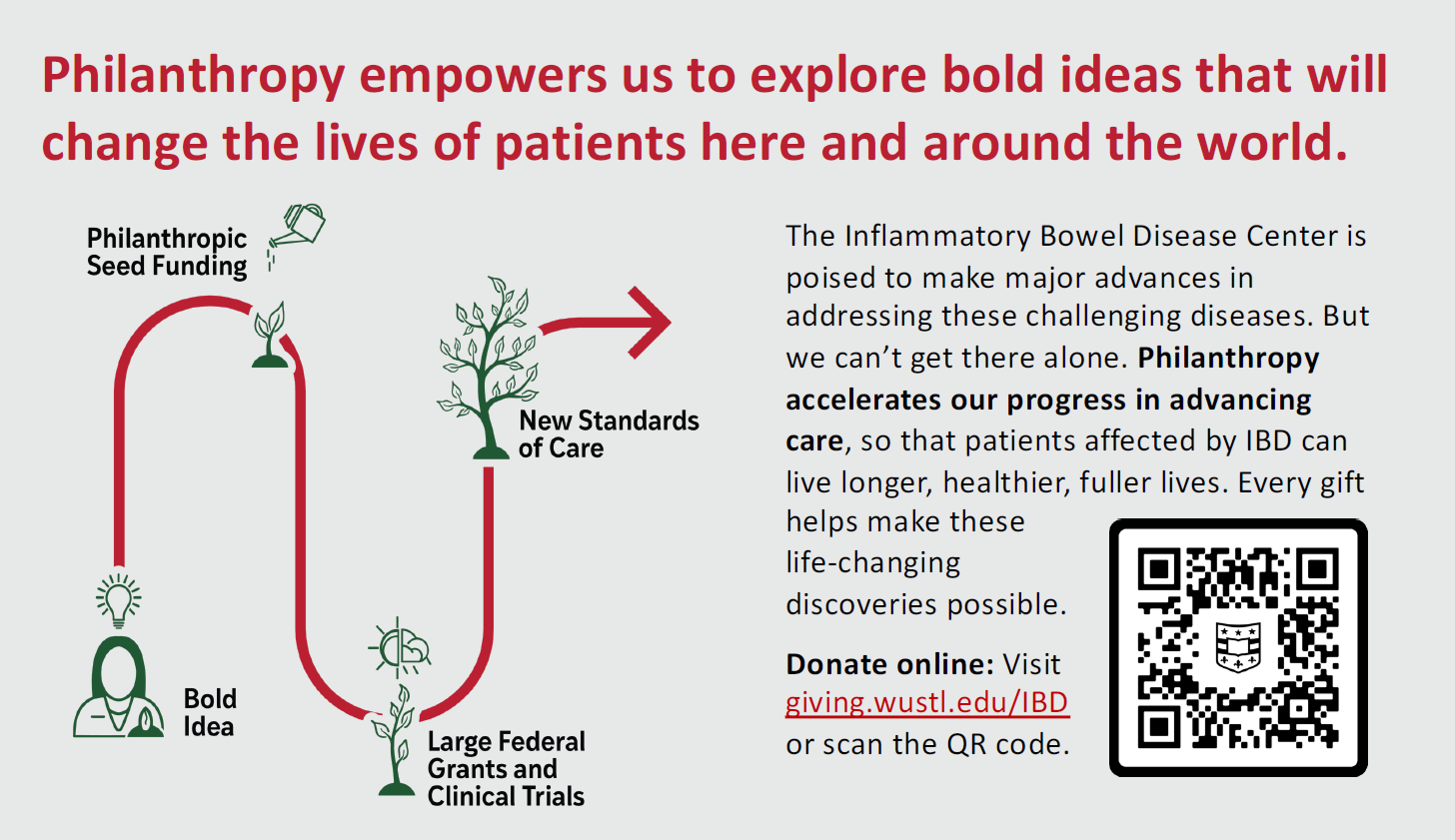
We rely heavily on philanthropic support to propel our life-changing research forward. Private seed funding allows us to pursue pathbreaking lines of inquiry that may not qualify for federal funds, and it enables us to lay the groundwork that leads to major NIH grants. With your help, we can make the next big leap in IBD care.